Global Crypto Regulations Reshape Live Dealer Table Landscapes Beyond UK Borders
Petra Frank · Aug 24, 2026
Global Crypto Regulations Reshape Live Dealer Table Landscapes Beyond UK Borders
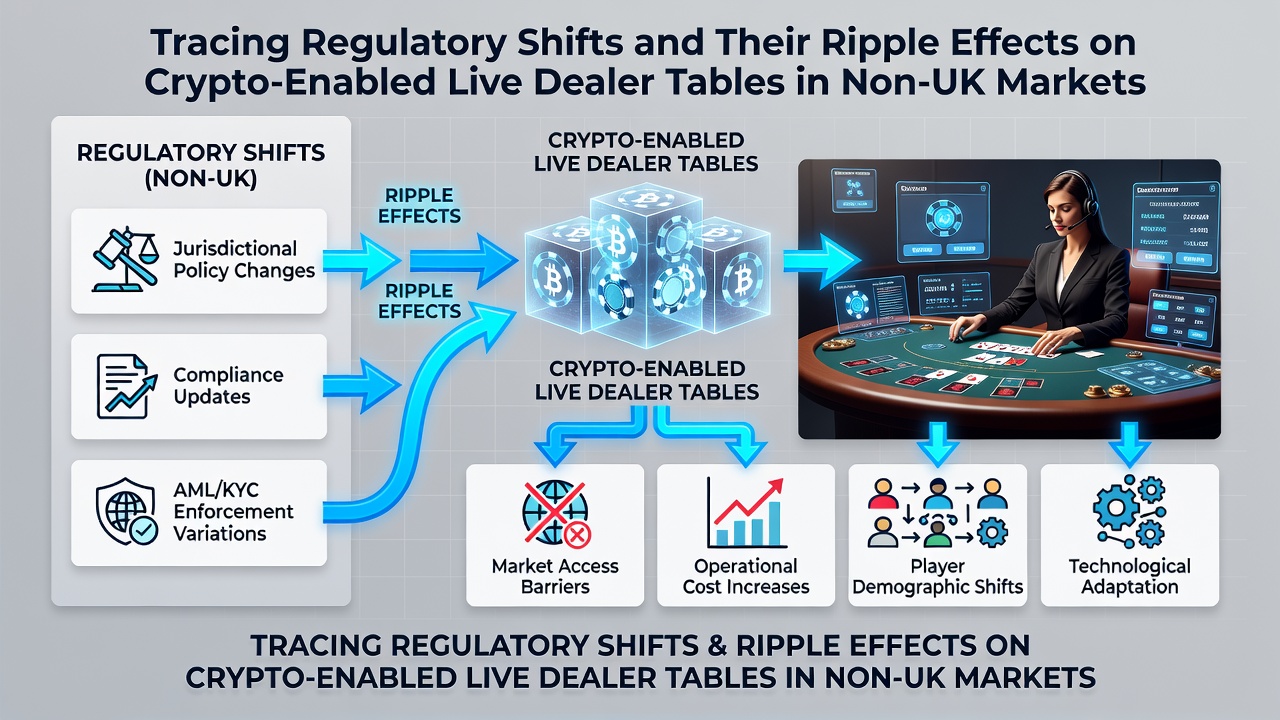
Regulatory frameworks in non-UK markets continue to evolve around crypto-enabled live dealer tables, and those shifts create measurable impacts on licensing, payment rails, and operational models in places such as the European Union, North America, and parts of Asia-Pacific. Observers note that operators must adapt to new licensing tiers that explicitly address blockchain-based deposits and withdrawals while maintaining real-time dealer streams.
Key Jurisdictions Driving Change
Malta's Gaming Authority updated its remote gaming guidelines in early 2026 to require separate authorization for cryptocurrency settlement modules attached to live dealer products, and this requirement has prompted several platforms to restructure their backend custody arrangements. Data from the authority shows that applications for crypto-integrated live casino licenses rose 28 percent between January and July 2026. Meanwhile, several Canadian provinces have introduced pilot programs that tie digital asset transaction reporting directly to existing iGaming frameworks, creating a single compliance pathway for both fiat and crypto live tables.
In the United States, state-level regulators in New Jersey and Pennsylvania have issued clarifying memos that treat crypto live dealer tables under the same financial crime prevention rules applied to traditional online tables, yet they add mandatory on-chain audit trails for every wager above a defined threshold. Those memos took effect in August 2026, and operators report that integration timelines stretched by an average of four months to accommodate the new logging standards.
Operational Ripple Effects on Platforms
Live dealer providers that rely on crypto rails have adjusted their software stacks to support jurisdiction-specific wallet whitelisting and real-time conversion engines. Research from industry monitoring groups indicates that average latency for dealer-stream synchronization increased by 120 milliseconds when platforms added mandatory compliance checks, yet most sites absorbed the change without noticeable disruption to player experience. Payment processors serving these markets now require proof of source-of-funds for crypto deposits exceeding certain limits, a step that mirrors rules already applied in traditional banking channels.
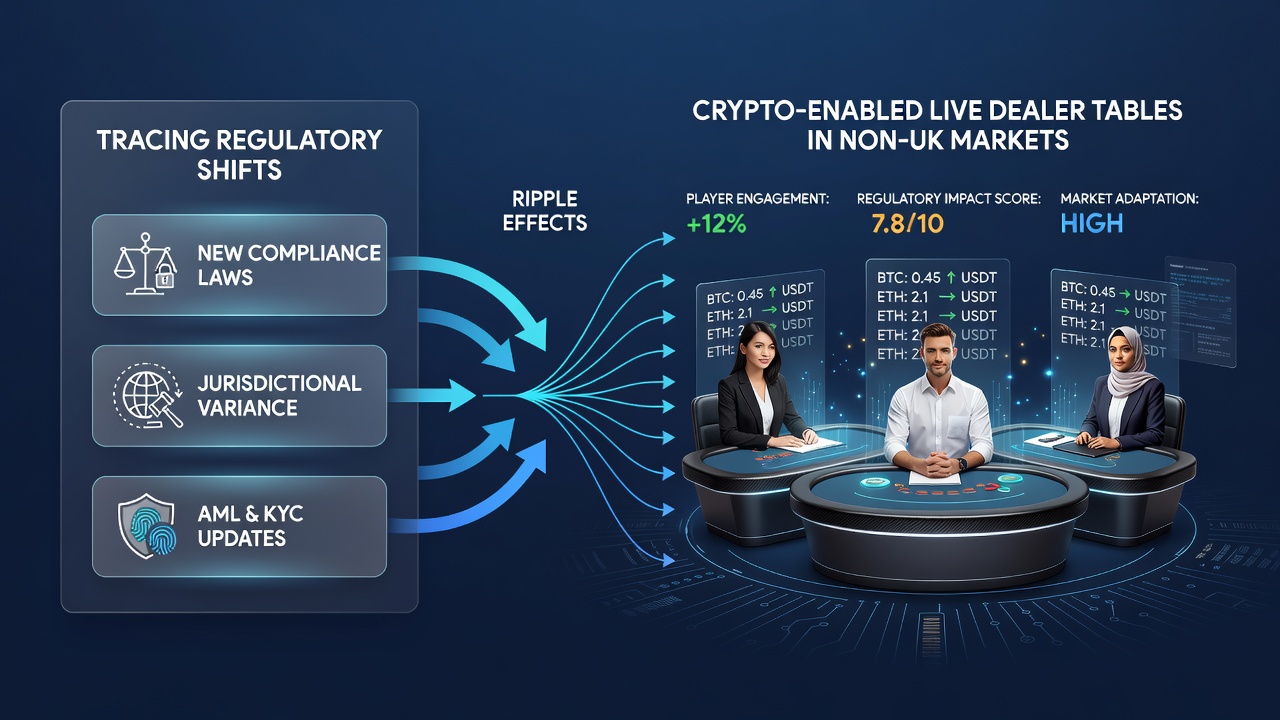
European operators have responded by forming consortiums that share standardized KYC APIs tailored for crypto live environments, and one such group recently published interoperability guidelines that several platforms adopted within weeks. The approach reduces duplicated verification costs while satisfying multiple national regulators simultaneously. In Australia, the federal government’s digital asset consultation paper released in mid-2026 proposes that live dealer tables accepting crypto must route all transactions through licensed exchanges, a measure that would effectively separate the gambling operator from direct wallet custody.
Technology and Compliance Adaptations
Software vendors specializing in live casino infrastructure have released modular compliance packages that slot into existing dealer management systems. These packages handle on-chain monitoring, automatic tax reporting, and geo-fencing based on IP and wallet origin. Adoption rates among mid-sized operators reached 65 percent by August 2026 according to vendor shipment data. Larger groups with in-house development teams built custom solutions that integrate directly with public blockchain explorers, allowing regulators to query transaction histories without requesting manual exports.
Market data reveals that crypto live dealer tables now represent approximately 14 percent of total live casino handle in regulated non-UK European markets, up from 9 percent two years earlier. Growth has been strongest in jurisdictions that clarified licensing pathways early, whereas markets still developing rules show slower uptake and higher withdrawal processing times.
Conclusion
Regulatory developments across multiple continents continue to influence how crypto-enabled live dealer tables operate outside the UK, and operators respond by refining technical controls, forming shared compliance resources, and adjusting business models to meet new reporting standards. Figures from regulatory bodies and industry associations demonstrate steady adaptation rather than contraction, with platforms that invested early in modular compliance tools gaining measurable advantages in licensing speed and cross-border expansion.