Tracing Player Pathways in Unified Loyalty Systems Linking Sports Wagers, Slots, and Live Tables
Avery Schwarz · Aug 3, 2026

Tracing Player Pathways in Unified Loyalty Systems Linking Sports Wagers, Slots, and Live Tables
Operators have built integrated platforms where loyalty points earned from athletic wagers flow directly into reel spins and live table sessions, creating traceable pathways that operators monitor through centralized databases. These structures assign tiered rewards based on total activity across verticals, so a player who places bets on football matches accumulates credits that unlock free spins on video slots or entry into live dealer blackjack tables. Data from multiple markets shows that such linkages increase session duration because points convert at fixed rates regardless of the starting activity.
Mechanics of Point Accumulation Across Verticals
Systems calculate points using multipliers tied to wager size and game type, with sports bets often generating base rates that carry over when the same account switches to casino play. A $50 bet on a tennis match might yield 50 points, while equivalent spend on reels or tables adds the same amount, and higher tiers apply bonuses such as double points during promotional windows. In August 2026 platform updates revealed that operators in several jurisdictions adjusted these formulas to balance retention between high-volume sports users and steady casino participants, ensuring neither group outpaces the other in tier progression.
Live table sessions contribute through time-based or hand-count metrics that feed into the same ledger, allowing a player finishing a poker round to redeem accumulated credits immediately for slot bonuses without separate logins. This seamless transfer relies on real-time APIs that sync balances across sportsbooks, slot servers, and table management software, reducing friction that once forced players to maintain separate balances.
Tracking Pathways Through Centralized Data
Analytics engines map individual routes by logging every point-earning event and subsequent redemption, revealing patterns such as sports bettors moving to reels after hitting loss limits or table players returning to wagers following bonus triggers. Researchers at institutions like the Australian Gambling Research Centre have documented how these maps help operators predict churn, with pathway data indicating that users who cycle through all three activities within a single week show retention rates above 70 percent in sampled cohorts. External verification from bodies such as the Nevada Gaming Control Board confirms that integrated tracking now covers over 60 percent of large-scale operations in monitored regions.
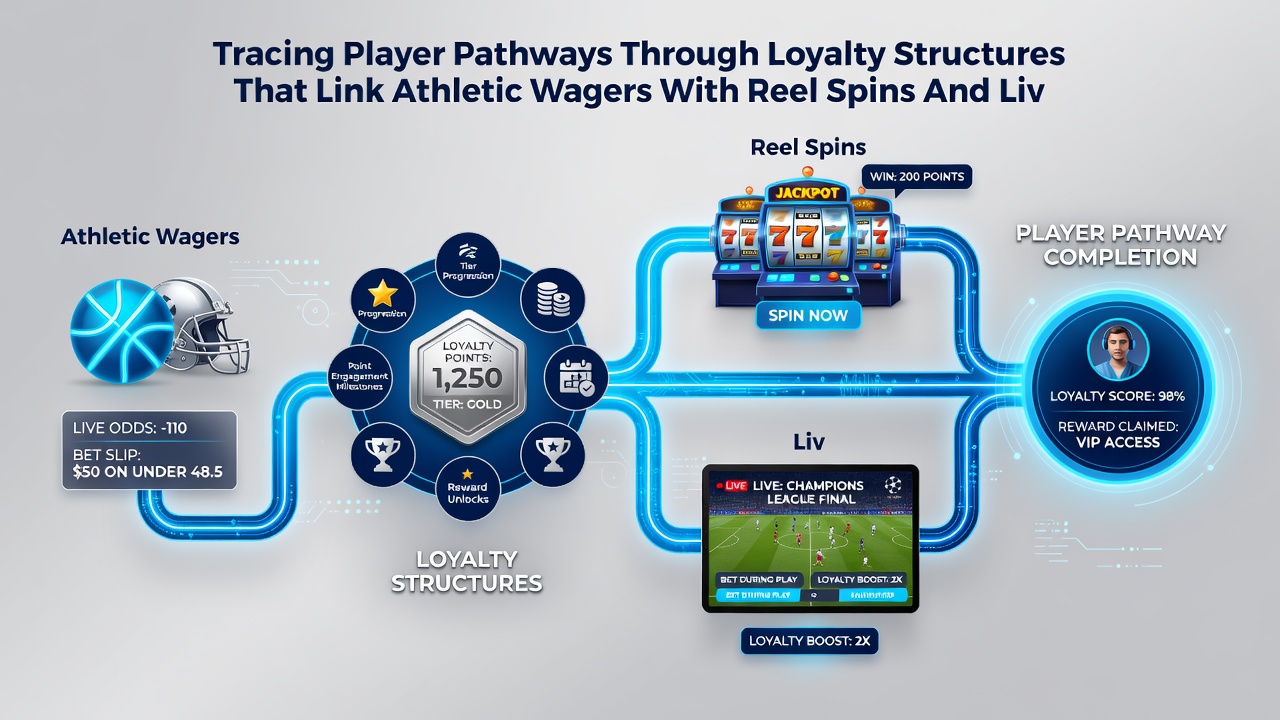
Segmentation tools divide users into cohorts based on entry point, whether they begin with athletic wagers or reel spins, and operators adjust offers accordingly, sending targeted reloads to those who favor live tables after sports activity. The approach avoids isolated vertical promotions and instead emphasizes cross-credits that keep accounts active across multiple product lines simultaneously.
Examples from Integrated Platforms
One European operator implemented a tier system where sports points automatically qualify accounts for live casino tournaments, resulting in measurable shifts where former single-vertical players completed pathways spanning all three areas within monthly cycles. Similar programs in Canadian provinces link provincial lottery-linked sports pools with casino reels, and figures from industry associations show average monthly point redemptions rising when pathways remain open rather than segmented. These cases illustrate how the structure turns isolated sessions into continuous loops without requiring separate marketing pushes for each vertical.
Retention Effects and Regulatory Context
Retention metrics collected across platforms demonstrate that unified loyalty frameworks correlate with higher lifetime value because players encounter fewer barriers when moving between athletic wagers, reel spins, and live sessions. Regulatory frameworks in non-UK jurisdictions, including oversight from the New Jersey Division of Gaming Enforcement, require transparent disclosure of point conversion rates so participants understand how activity in one area affects rewards in others. Observers note that such transparency supports sustained engagement while meeting compliance standards that differ by region.
Conclusion
Pathway tracing within these loyalty structures continues to evolve as operators refine algorithms that connect athletic wagers with reel spins and live table sessions, supported by data from international sources and regulatory records. The result is a connected ecosystem where activity in any vertical feeds progress across the others, documented through consistent tracking methods and cross-market examples.